
Polyurethane sits between rubber and steel. It carries more load than rubber at the same hardness, resists abrasion and cutting, and holds its shape under pressure.
It is not a universal upgrade. PU runs hotter internally, performs poorly with some solvents, and is more expensive.
Values marked “to be confirmed” are set against the factory’s tested capability before quotation. Send your dimensions and we will confirm against them. Choose PU for load, abrasion and cut resistance. Choose rubber for heat above 80 °C, for solvent contact, or where you need very soft conforming nips below 40 Shore A. Usually heat build-up or hydrolysis. PU generates internal heat under high-frequency cyclic load, and some grades degrade in hot humid conditions. Tell us the duty cycle and we will pick the right grade. Yes. Send the core, or send dimensions and we will machine a new one. Cast PU bonds mechanically and chemically to a prepared surface, so core preparation matters as much as the compound. Email your drawing, the machine model, or photos of the roller you need replaced. You will get a material proposal, a price and a lead time.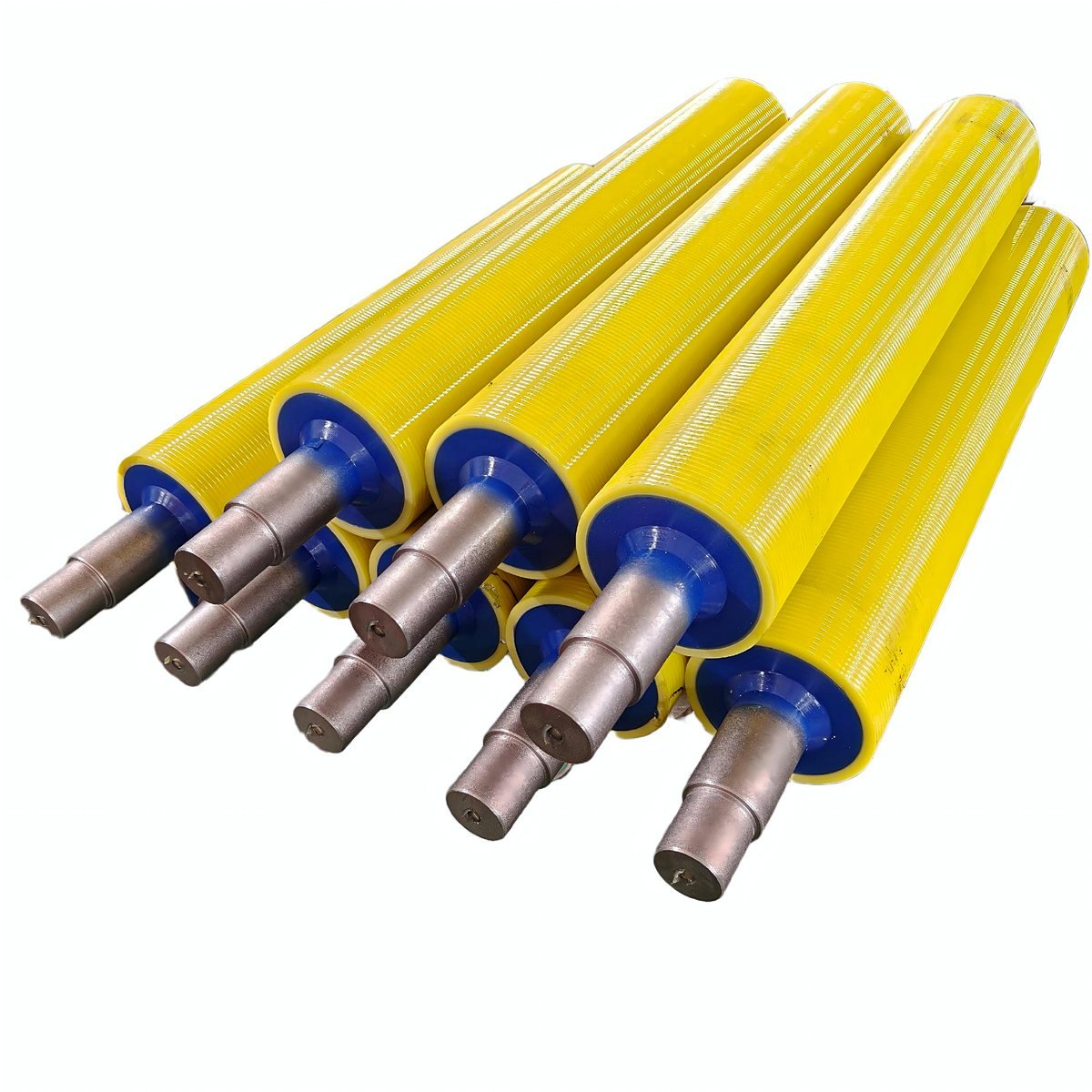
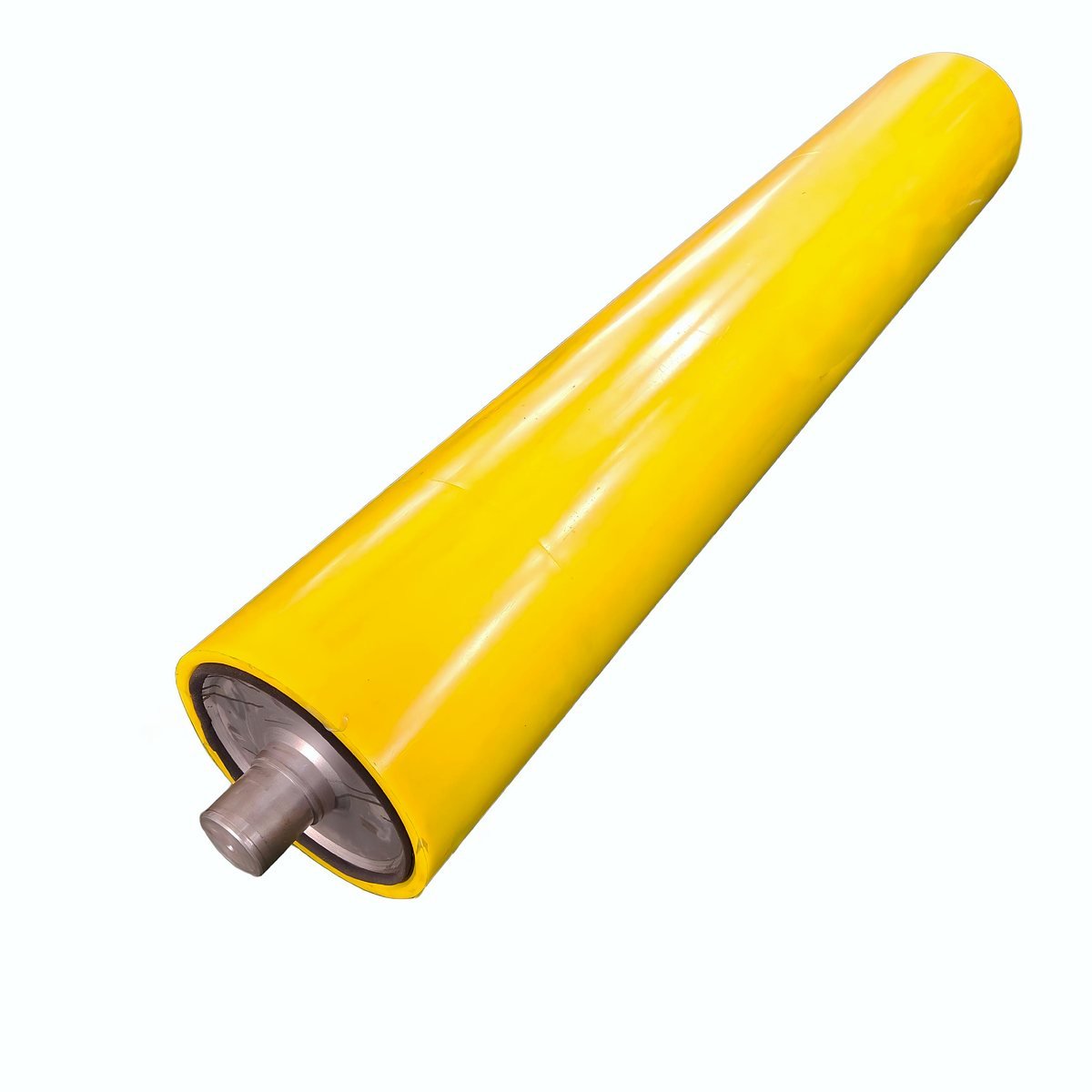
What We Can Build
Parameter Range / option Hardness 60 Shore A – 70 Shore D Tensile strength to be confirmed Abrasion resistance to be confirmed Continuous temperature up to 80 °C Cover thickness 3–25 mm Colour Amber standard, custom colours available Core Steel or aluminium, machined to drawing Where These Rollers Are Used
Polyurethane Roller Questions
PU or rubber — how do I choose?
Why does PU fail in some applications?
Can PU be bonded to my existing core?
Send the Drawing or the Worn Roller