
Stainless Steel Sprocket Rollers
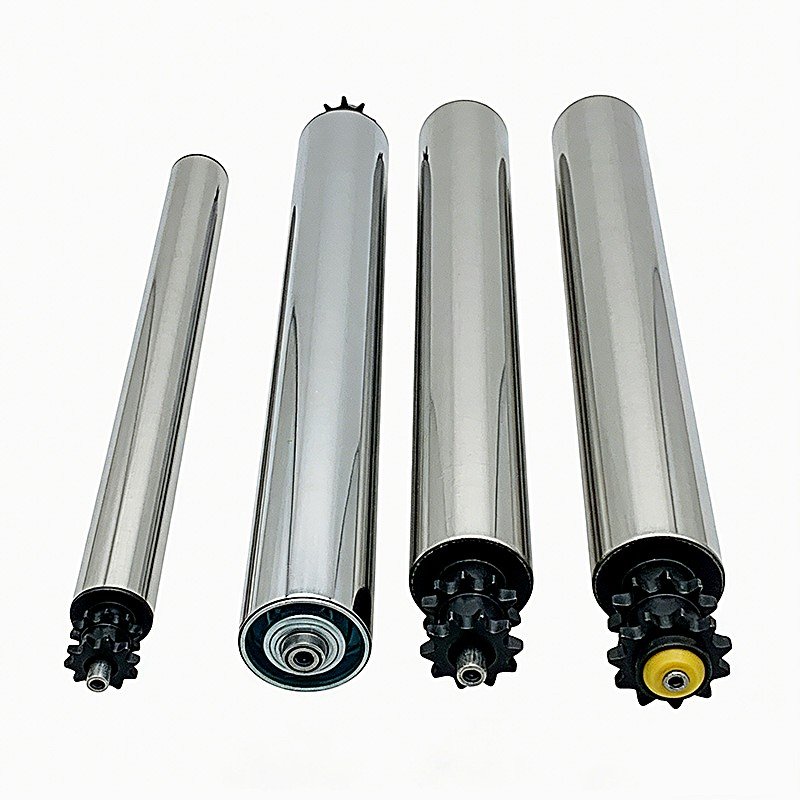
Chain-driven light rollers built from polished stainless steel or galvanized tube. Single or double sprockets, sealed bearings, and every size — diameter, tube length, shaft end, sprocket layout — made to your drawing.
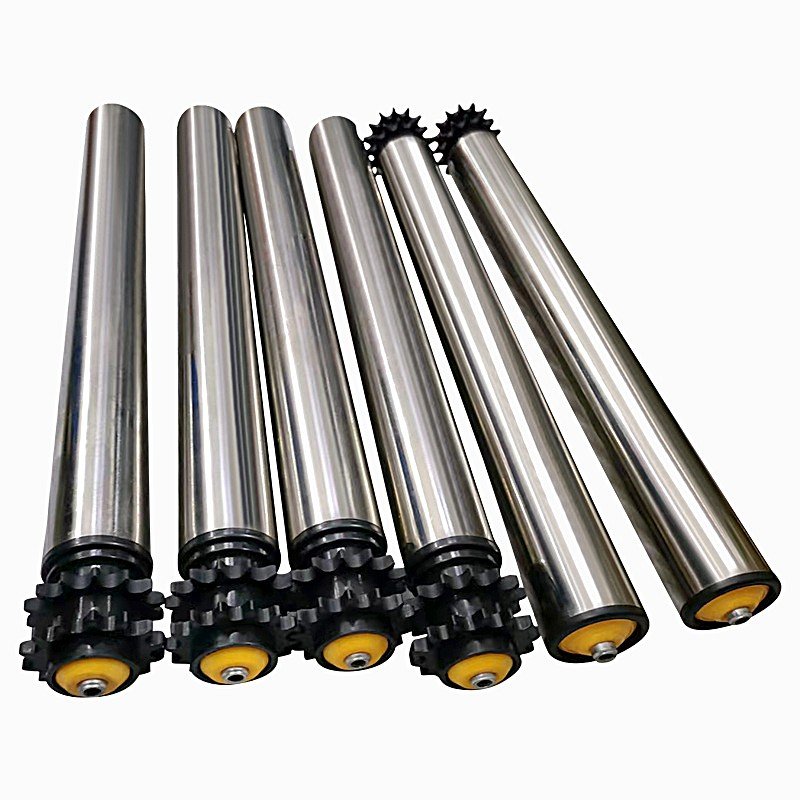
The driven roller for light and medium chain-powered lines. When the conveyor is powered by a chain loop instead of a belt, each roller carries a sprocket on the shaft end. These rollers pair that drive layout with corrosion-resistant tubes — polished stainless steel for wet, washdown and food-adjacent lines, galvanized steel for dry duty at lower cost.
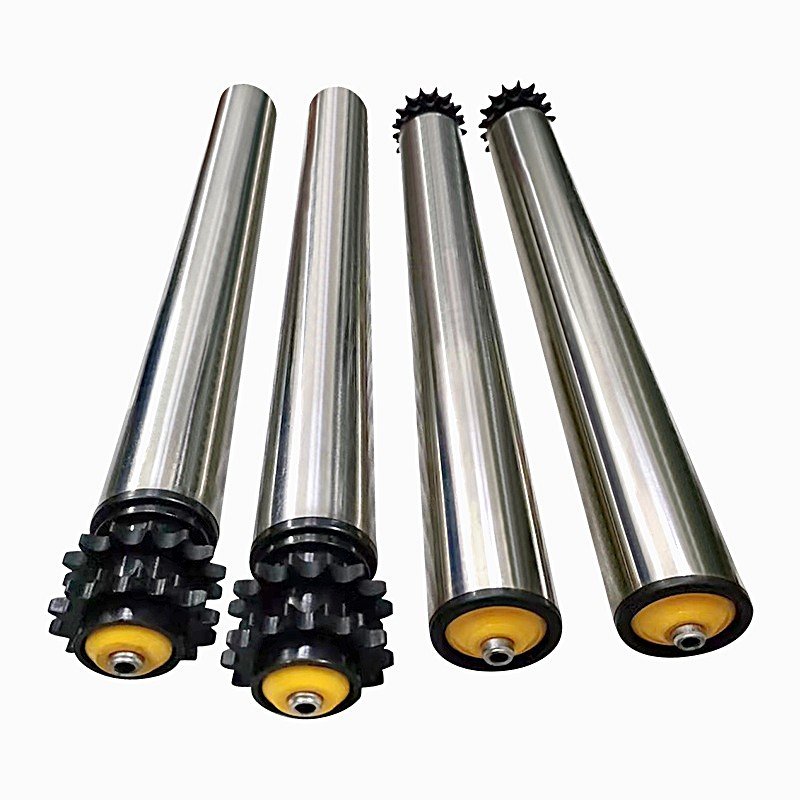
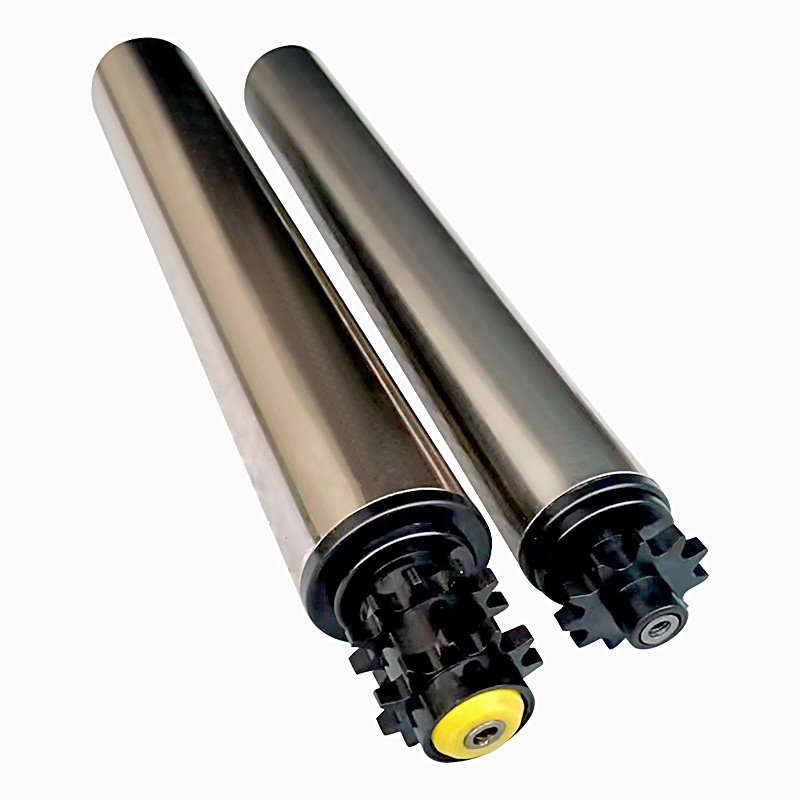
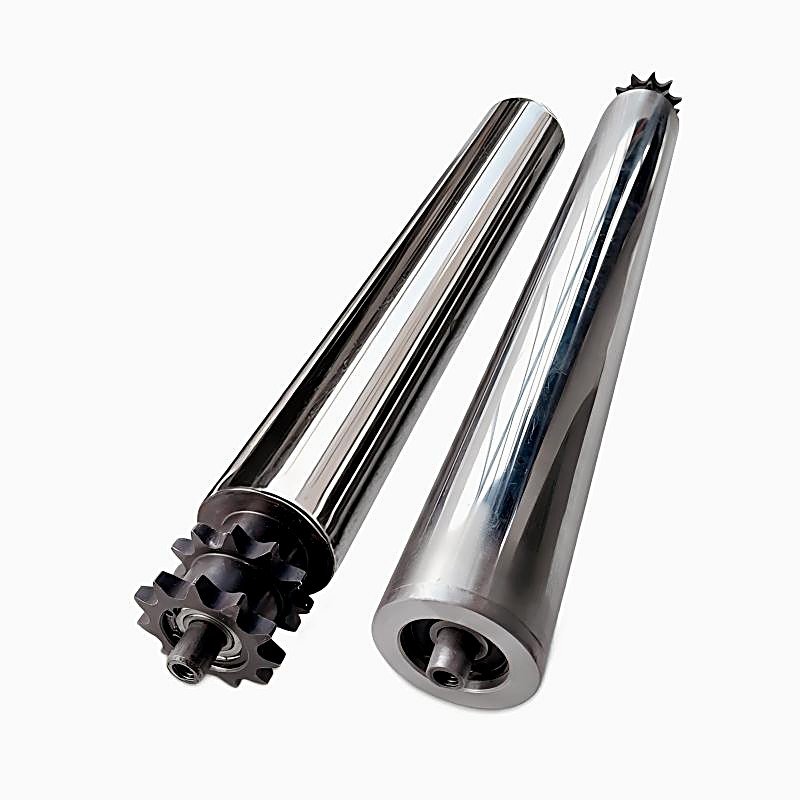
Single or double sprockets are fitted to match your chain pitch and position, and bearing seats are molded to hold sealed ball bearings. Tube diameter, length, shaft end and sprocket specification all follow your drawing — send the frame sizes or a worn roller and we build to match.
Product Overview
Polished stainless steel or galvanized tubes turned, trued and fitted with sprockets on one or both shaft ends. Sealed ball bearings sit in molded bearing seats, so the roller spins free while the chain takes the drive. Double-sprocket versions drive two chain loops or balance the pull on wider beds. Built for chain-powered conveyor in wet, humid and washdown environments where plain carbon steel would corrode.
Key Specification
- Tube: polished stainless steel, or galvanized steel for dry duty
- Sprockets: single or double, matched to your chain pitch and position
- Bearings: sealed ball bearings in molded bearing seats
- Shaft: steel, machined to your frame drawing
- Sizes: diameter, tube length, shaft end and sprocket layout to specification
Inquiry Email: sencroll@outlook.com
Build & Options
Every sprocket roller is built to the customer specification — send the drawing, the chain data, or the worn roller you are replacing.
| Item | Detail |
|---|---|
| Tube material | Polished stainless steel, or galvanized steel for dry environments — chosen per application |
| Sprockets | Single or double sprockets, pitch and tooth count matched to the customer chain |
| Bearings | Sealed ball bearings in molded bearing seats, pressed to a controlled fit |
| Shaft | Steel, machined to drawing; spring-loaded, threaded or fixed ends |
| Sizes | Tube diameter, length and sprocket layout made to specification |
| Packing | Export packing, rollers wrapped for protection |
What Chain Drive Changes on the Line
Positive Drive, No Slip
A chain loop turns every roller at exactly the same speed — no belt slip, no lag between rollers. Accumulation sections, transfers and timing-sensitive zones stay in step along the whole bed.
Stainless Where Water Lives
Driven lines often sit where the product is washed or the air is humid. Polished stainless tubes and sealed bearings keep the line running where painted carbon steel would rust through in a season.
Matched to Your Chain
Send the chain pitch and the sprocket position — single or double, one end or both — and the rollers arrive ready to drop into the existing chain loop with no re-pitching on site.
Where Stainless Sprocket Rollers Are Used
- Chain-driven conveyor in food-adjacent and washdown lines
- Accumulation and transfer beds needing synchronized rollers
- Humid workshops where galvanized or painted tubes corrode
- Pallet and carton chain conveyor retrofits
- Roller replacement on imported lines — rebuilt to the worn sample
Sprocket Roller Questions
Stainless steel or galvanized tube — which should I choose?
Stainless wins wherever the roller meets water, washdown, salt air or food-adjacent cleaning — it keeps its surface and never flakes. Galvanized tube costs less and does well in dry, indoor duty. Send the environment the line runs in and we recommend the tube instead of defaulting to the dearer option.
Single or double sprockets — what is the difference?
Single sprockets drive the roller from one chain loop. Double sprockets serve two chain loops — common on wider beds driven from both sides, or where a second loop balances the pull. Tell us the drive layout, or send a photo of the existing roller ends, and we match it.
What do you need to match my chain?
The chain pitch and the sprocket position on the shaft end. A drawing is ideal; a clear photo of the worn roller with a ruler across the sprocket works too. The sprockets arrive matched to your chain so the rollers drop straight into the loop.
Can you make sizes outside your standard range?
Yes — that is the default here. Tube diameter, length, shaft end and sprocket layout are all made to drawing, one piece up and mixed sizes in one order. Send the frame sizes or the sample and we quote from that.
What do you need to quote a sprocket roller?
The tube material (stainless or galvanized), diameter, length, shaft end type, chain pitch, single or double sprockets, and quantity. A drawing or a photo of the roller you are replacing covers most of it. You get a price and lead time within one business day.
Send the Chain Data or the Worn Roller
Email the tube sizes, chain pitch and sprocket layout — or a photo of the roller you are replacing. Sprocket rollers are quoted with packing and lead time, usually within one business day.