
Light Duty Conveyor Rollers
Light rollers for light work: stainless and galvanized gravity rollers, PVC and PU conveyor rollers, chain-driven stainless sprocket rollers and matched belt conveyor drive and idler rollers — five families, one workshop, every roller made to drawing.
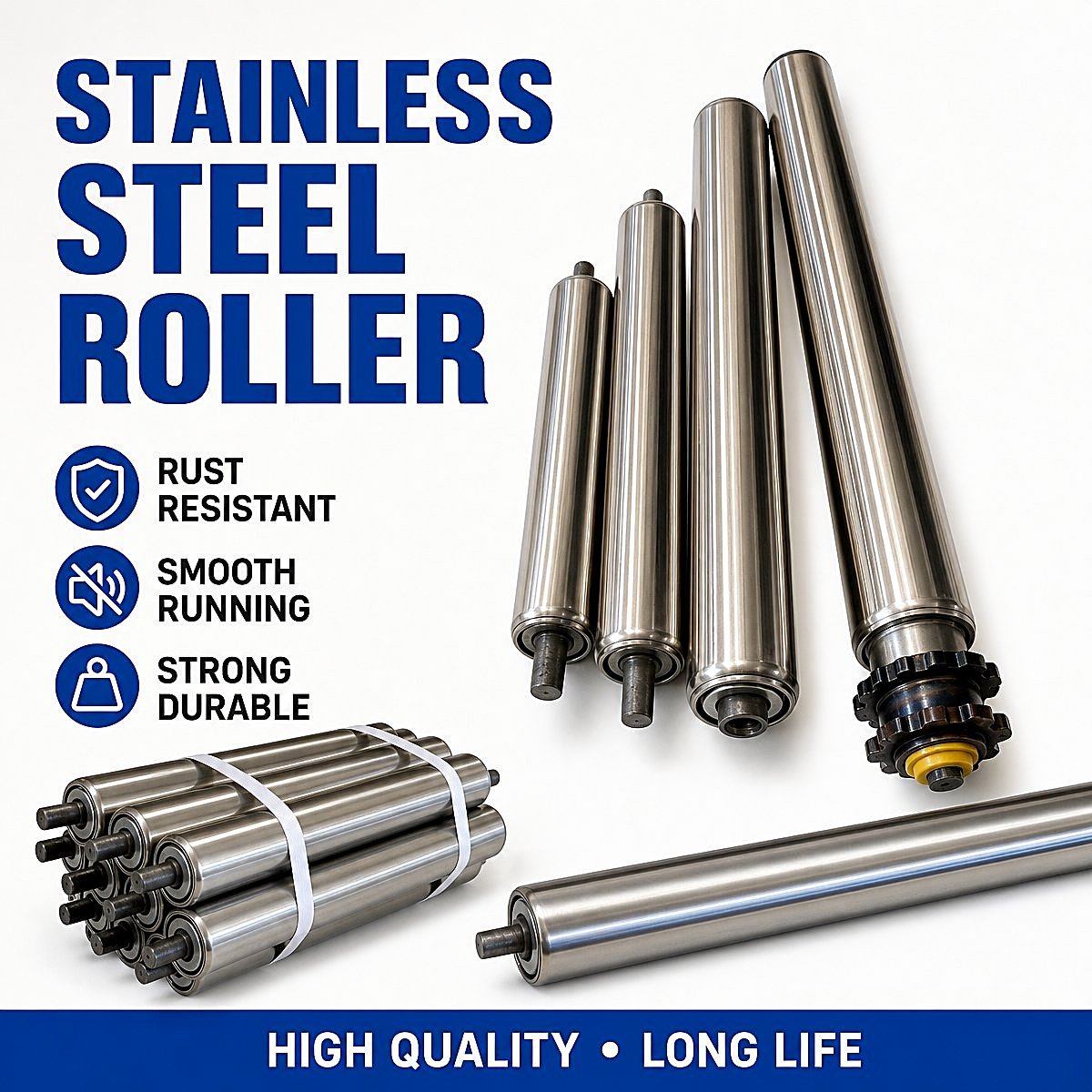
Light duty rollers carry cartons, totes, parcels, film and labels — loads measured in kilograms, not tonnes. What they share is a light tube, sealed ball bearings and a shaft end matched to the frame; what they need is a roller that runs true for millions of cycles without drama. This range collects our light-roller families: bare steel gravity rollers in stainless 304 or galvanized steel, PVC conveyor rollers for light, wet and washdown lines, PU covered conveyor rollers for quiet and product-friendly lines, chain-driven stainless sprocket rollers for powered beds, and matched drive and idler rollers for belt conveyor.
Every family below is machined and assembled in the same Hengshui workshop to your specification — one piece is possible, mixed sizes ship in one order, and a quotation comes back within one business day.
Five Families Under Light Duty Rollers
All six are built to drawing in the same workshop — one piece is possible and mixed sizes ship in one order.
Light Duty Roller FAQs
What counts as a light duty roller in your range?
Five families: bare steel gravity rollers in stainless 304 or galvanized steel (tube Ø38–60 mm), PVC conveyor rollers, PU covered conveyor rollers, chain-driven stainless sprocket rollers and matched belt conveyor drive and idler rollers. What they share is light-tube construction, sealed ball bearings and a shaft end matched to your frame.
Galvanized or stainless steel — which one do I need?
Galvanized covers most dry indoor lines at a lower cost. Choose stainless 304 for washdown, humid or corrosive areas, or wherever the roller gets wet regularly. If the line sits near chemicals or salt air, go stainless.
PU covered or bare steel roller — when does it matter?
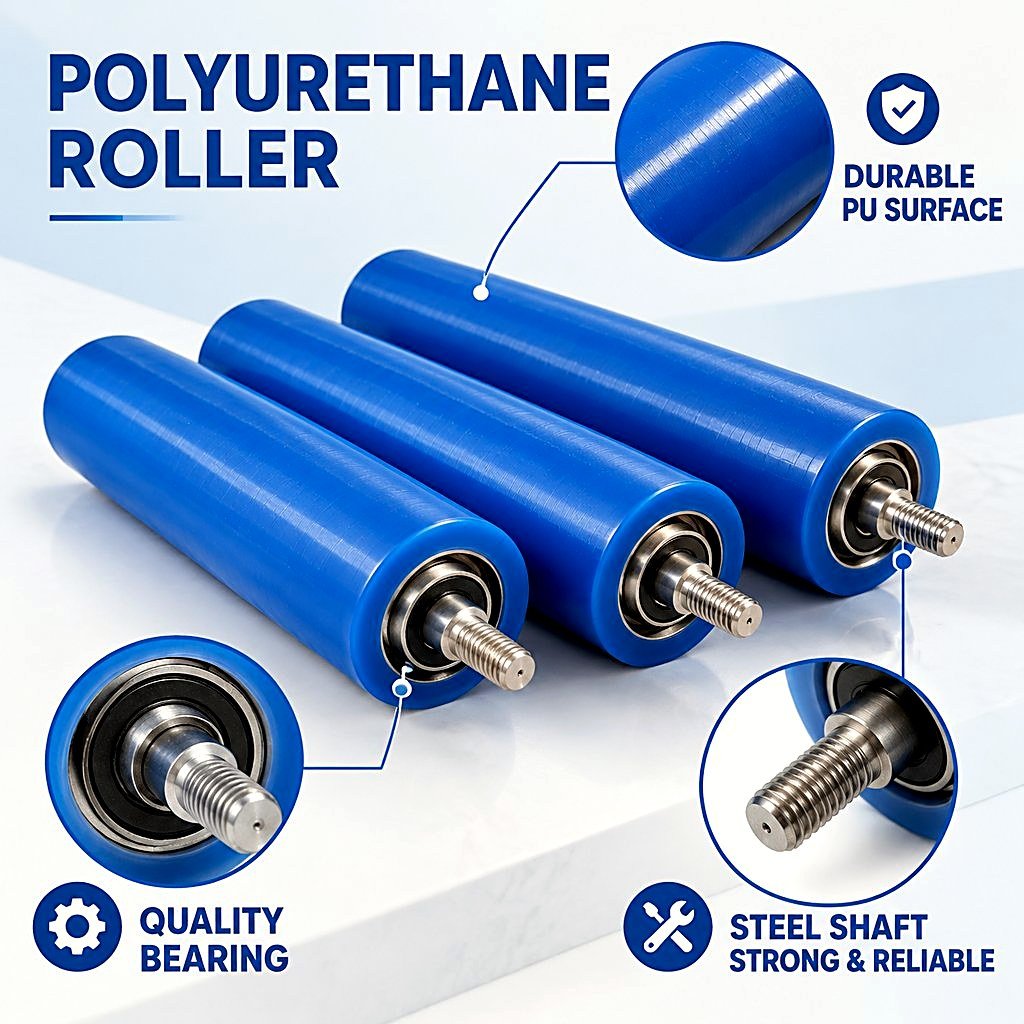
Bare steel is the default where the roller simply carries cartons and cost matters. A PU cover earns its place when noise, product marking or surface grip matter — it cushions drops, damps rattle and grips inclines. Both are made to the same frame dimensions, so switching later is a tube swap, not a redesign.
Can you match my existing conveyor frame?
Yes. Send the inner frame width, the tube diameter you are replacing and the shaft end type (round pin, male or female thread). We make the rollers to those dimensions so they drop straight in.
What do you need to quote a light duty roller?
For gravity rollers: tube diameter, length, shaft end and quantity. For PVC, PU, sprocket or belt drive rollers: add the line duty and the environment the line runs in. Every enquiry Every enquiry is answered with a price and a lead time within one business day.
Choosing Inside the Light Duty Range
One workshop, five families
The gravity rollers, the PVC rollers, the PU covered rollers, the sprocket rollers and the belt drive rollers share the same machining base: tubes are trued and balanced in house, bearings are pressed to a controlled fit, and shaft ends are turned to the frame drawing. That is why a mixed order — steel gravity rollers for the main line and PU rollers at the transfer points — ships as one consignment with one quotation.
Bare steel rollers: the frame decides
For gravity conveyor the roller is matched to the frame, not to a catalogue. Inner frame width sets the roller length, the shaft end (round pin, male thread or female thread) sets the fixing, and the load per roller sets the tube diameter and bearing. Send those three numbers and the rollers drop straight in.
PVC rollers: light lines, wet areas
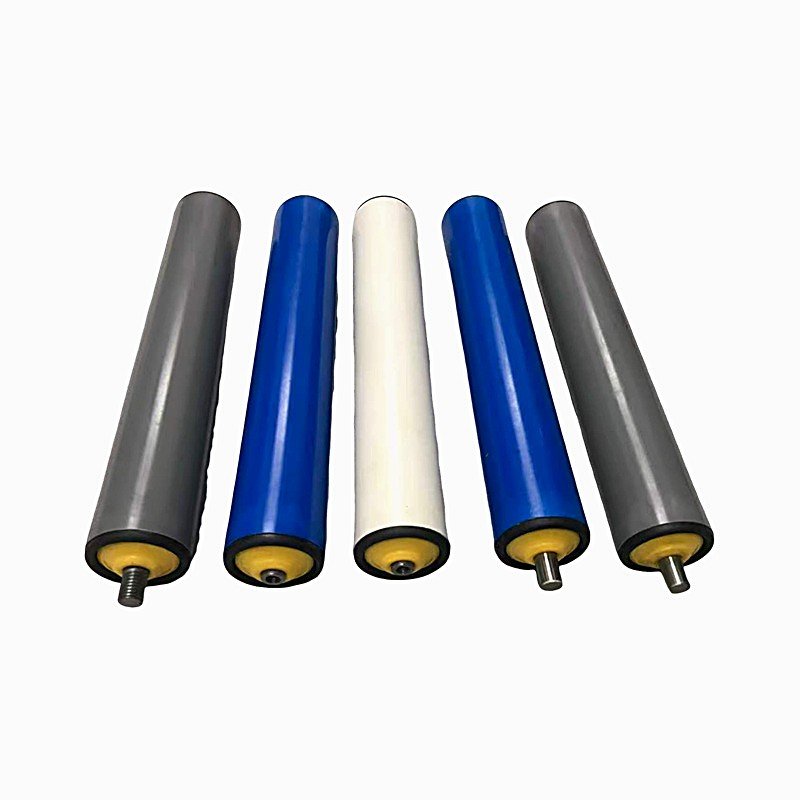
Rigid PVC tubes are the lightweight answer: they never corrode, roll quietly and cost less than coated steel. Plain tubes run on gravity conveyor; sprocket versions run chain-driven lines. Where the environment is wet or the goods must not be marked, PVC is the first roller to price.
PU covered rollers: quiet runs and gentle contact
A polyurethane cover cushions the drop, damps the rattle of a bare tube and grips inclines and transfer points. It is the default wherever the line runs near people, handles finished surfaces, or moves products that must not be marked. Cover hardness is chosen against the load — tell us what the roller carries and we specify it.
Stainless sprocket rollers: chain-powered beds
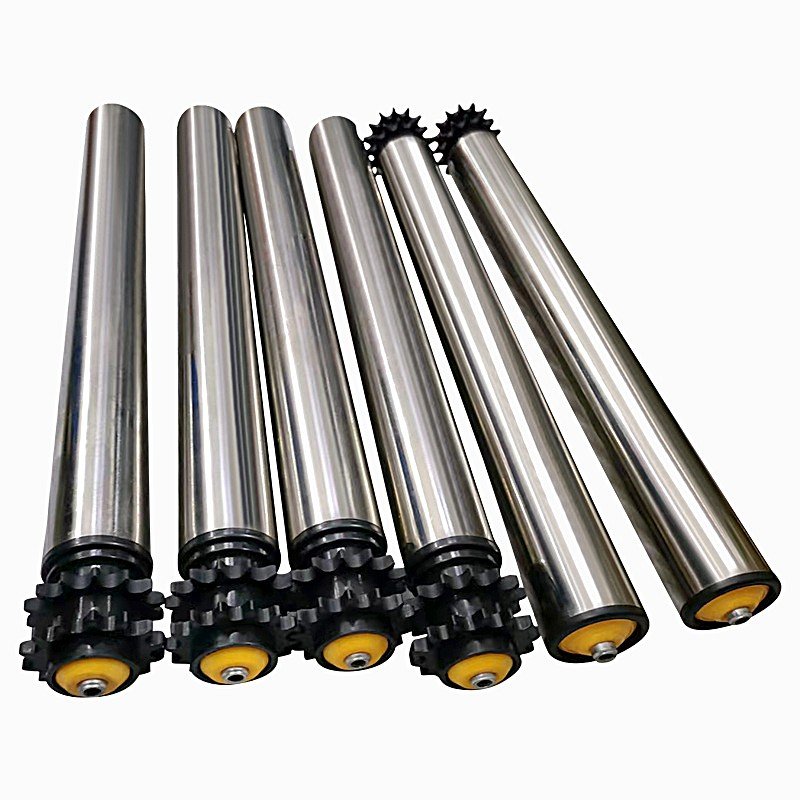
Where the line is driven by a chain loop, each roller takes a sprocket on the shaft end. Polished stainless or galvanized tubes, single or double sprockets matched to the chain pitch, sealed bearings in molded seats — built to drawing so the rollers drop straight into the existing loop.
Belt drive & idler rollers: the powered shafts
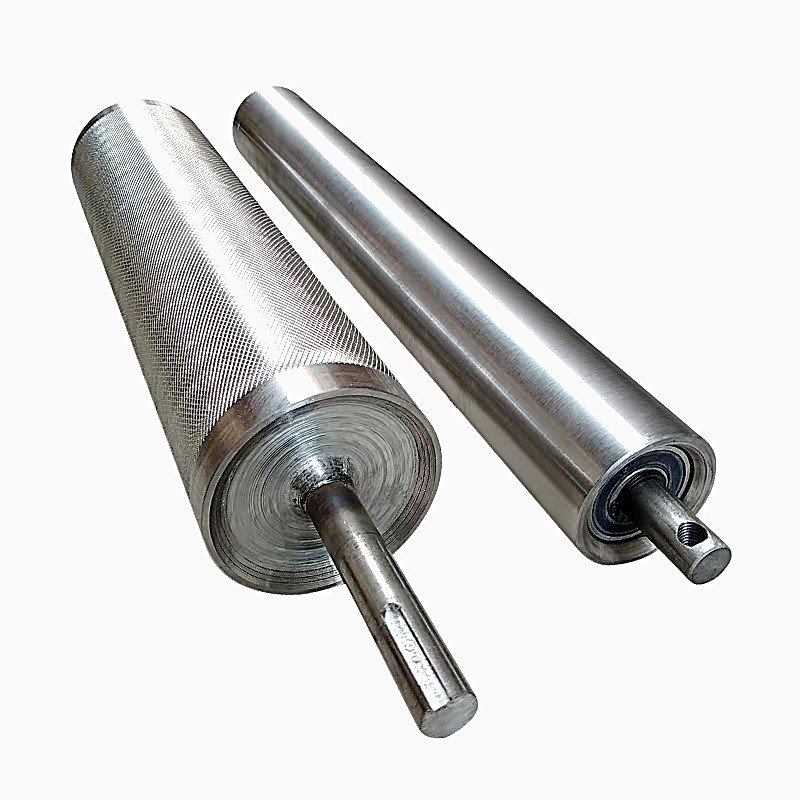
Where the bed carries a belt, the drive roller needs grip and the idlers need to run true. Knurled drive rollers and smooth idler rollers are built as a matched pair — carbon steel or stainless, keyed shafts, PU lagging optional, and every diameter and length made to drawing.
Why buy from SENC
We machine and assemble in our own workshop in Hengshui, so nothing is resold from a catalogue. One piece is possible, sizes can be mixed in an order, and the shaft end can be changed for your frame rather than for a stock list. ISO 9001:2015 quality system, quotation within 24 hours, shipment worldwide.
Send the Drawing or the Worn Roller
Email the frame sizes, the line duty or a photo of the roller you are replacing — you get a matching proposal, a price and a lead time, usually within one business day.