
Belt Conveyor Drive & Idler Rollers
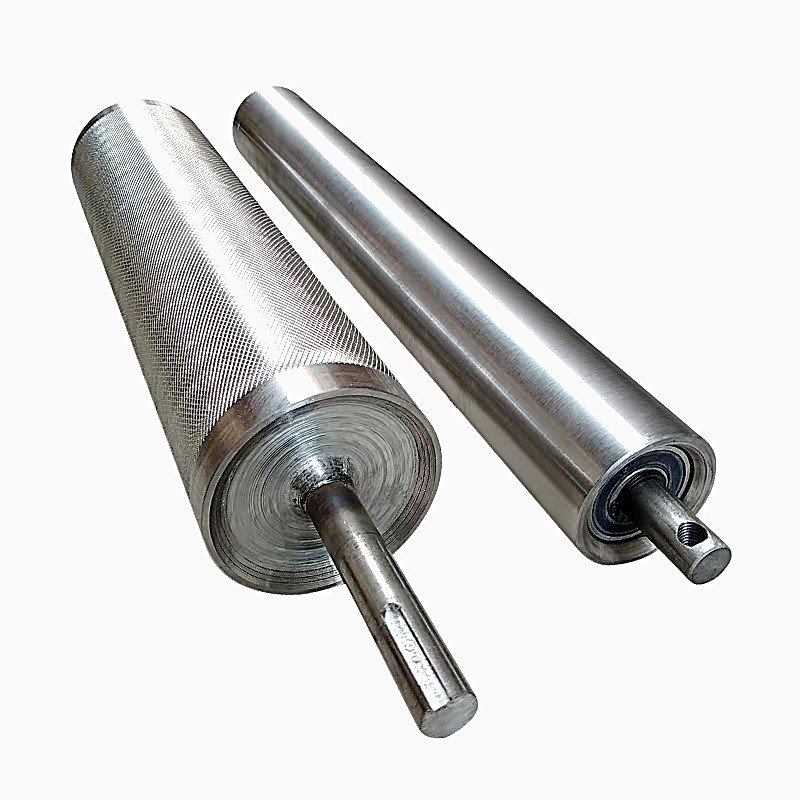
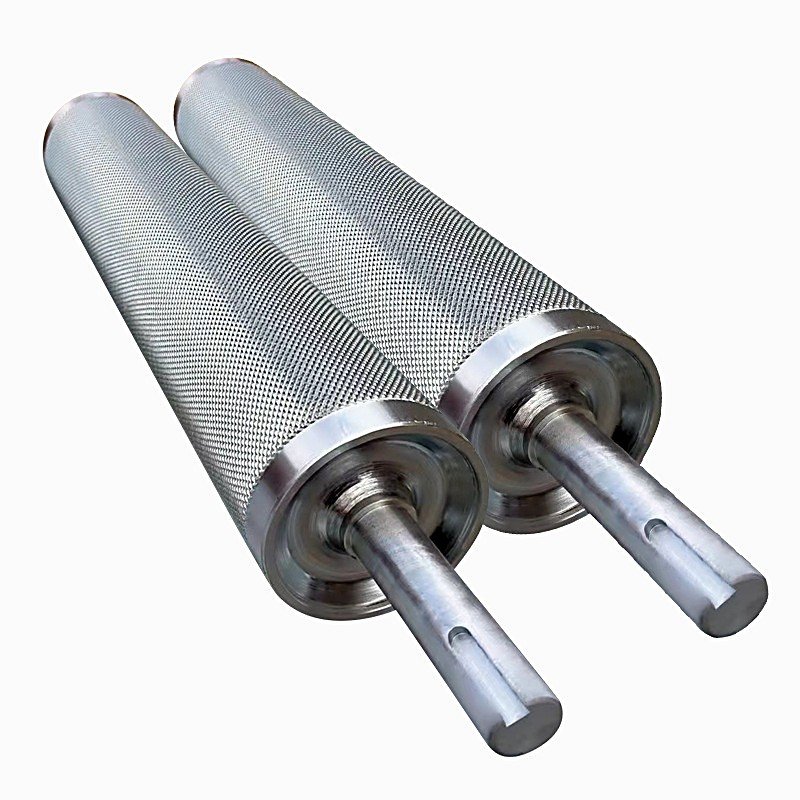
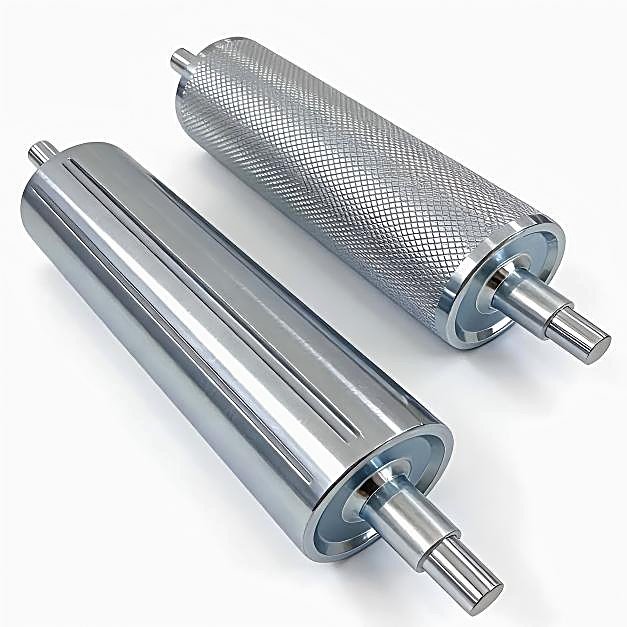
The driven and return shafts of a belt conveyor, built as one pair: knurled drive rollers that grip the belt, smooth idler rollers that carry the return. Carbon steel or stainless tube, keyed shafts, and every size — diameter, length, shaft end — made to your drawing.
One pair, one order — the shafts that actually move the belt. A belt conveyor lives or dies on its drive pulley: if the knurled drive roller slips, the belt stops tracking and the load piles up. This roller family covers both ends of that problem — a knurled drive roller that locks into the belt, and a smooth idler roller with a machined bearing seat that turns free on the return side. Order them together and the crown, diameter and shaft ends match by build, not by luck.
Tubes are machined from carbon steel or stainless steel. The drive surface carries a diamond knurl for grip; PU lagging is available where the belt needs more traction or quieter running. Shaft ends are turned with a key seat to take the drive. Standard tube diameters are 58 and 76 mm with 20 mm keyed shafts and lengths from 100 to 1000 mm — and outside that range, every size is made to drawing. Send your frame centres or the worn pair and we build to match.
Product Overview
Drive rollers carry a diamond knurl that bites the belt and transmits torque without slip; idler rollers run a smooth turned surface inside machined bearing seats. Tubes are trued and balanced in house, shafts are turned with key seats, and the pair is matched for diameter and crown so the belt tracks straight across the bed. Carbon steel for dry duty, stainless for wet and washdown lines, PU lagging where extra traction helps.
Key Specification
- Tube: carbon steel or stainless steel — chosen per application
- Types: knurled drive roller and smooth idler roller, ordered as a pair
- Tube diameter: Ø58 or Ø76 mm standard — other diameters to drawing
- Shaft: Ø20 mm, machined with key seat for the drive
- Length: 100–1000 mm in 50 mm steps — custom lengths to specification
- Surface: diamond knurl on drive, smooth on idler; PU lagging optional
Inquiry Email: sencroll@outlook.com
Build & Options
Standard sizes below — everything beyond them is made to drawing. Send the frame centres, the belt type, or the worn rollers you are replacing.
| Item | Detail |
|---|---|
| Tube material | Carbon steel (dry duty) or stainless steel (wet, washdown, food-adjacent) — chosen per application |
| Tube diameter | Ø58 mm or Ø76 mm standard; other diameters custom made to drawing |
| Roller length | 100–1000 mm standard (50 mm steps); custom lengths to specification |
| Shaft | Ø20 mm steel shaft, machined with key seat; other shaft ends to drawing |
| Drive surface | Diamond knurl on drive rollers; smooth turned surface on idler rollers |
| Lagging | PU lagging optional for extra traction and quieter running |
| Bearings | Sealed ball bearings in machined bearing seats |
| Packing | Export packing, rollers wrapped for protection |
What the Right Drive Pair Changes
Knurl That Holds the Belt
The diamond knurl multiplies friction between roller and belt, so torque transfers without slip even on start-up with a loaded bed. Less belt creep means steadier tracking and fewer jams at transfer points.
Idlers That Run True
Smooth idler rollers with sealed bearings keep the return side turning free. Machined bearing seats and trued tubes mean no wobble, no belt wandering — the belt tracks straight across the whole frame.
Every Size to Drawing
The listed diameters and lengths are the common sizes, not a limit. Diameter, length, shaft end, knurl pattern and lagging all follow your specification — one pair up, mixed sizes in one order.
Where These Belt Rollers Are Used
- Belt conveyor drive and return shafts in printing and converting lines
- Plastics processing and film handling conveyor
- Paper, building material and textile dyeing plants
- General factory belt conveyor builds and retrofits
- Wet or washdown lines on stainless tubes
- Replacement pairs rebuilt to the worn samples
Belt Roller Questions
What is the difference between the drive roller and the idler roller?
The drive roller is powered and carries a diamond knurl so it grips the belt and transmits torque without slipping. The idler roller is unpowered: a smooth turned surface in machined bearing seats that supports and returns the belt. Most beds need one drive roller and two or more idlers — order them as a matched pair set so diameter and crown line up.
Why a knurled surface on the drive roller?
The knurl raises friction between the roller face and the belt, so the drive torque transfers without slip — especially on start-up or with a loaded bed. Where the belt needs even more grip or quieter running, PU lagging can be applied over the tube instead of, or on top of, the knurl.
Can you make diameters and lengths outside the standard range?
Yes — that is the default here, not an exception. Ø58 and Ø76 mm with 20 mm shafts and 100–1000 mm lengths are the common sizes we stock tooling for. Any other diameter, length, shaft end or knurl pattern is machined to your drawing, one pair up and mixed sizes in one order.
Carbon steel or stainless — which tube for my line?
Carbon steel does well in dry, indoor duty and costs less. Stainless steel is the pick wherever the roller meets water, washdown, humidity or food-adjacent cleaning. Send the environment the line runs in and we recommend the tube instead of defaulting to the dearer option.
What do you need to quote a drive and idler pair?
The tube material, diameter, length, shaft end and knurl or lagging requirement — plus quantity. A drawing or a photo of the worn rollers with the frame centres works too. You get a price and lead time within one business day.
Send the Frame Centres or the Worn Pair
Email the tube sizes, shaft ends and surface you need — or a photo of the rollers you are replacing. Drive and idler pairs are quoted with packing and lead time, usually within one business day.