
Custom Polymer Conveyor Rollers
High-molecular plastic idler rollers that never rust, self-lubricate and shrug off the abrasion that kills steel rollers — built to your drawing for mining and harsh-environment conveyor, one piece up.
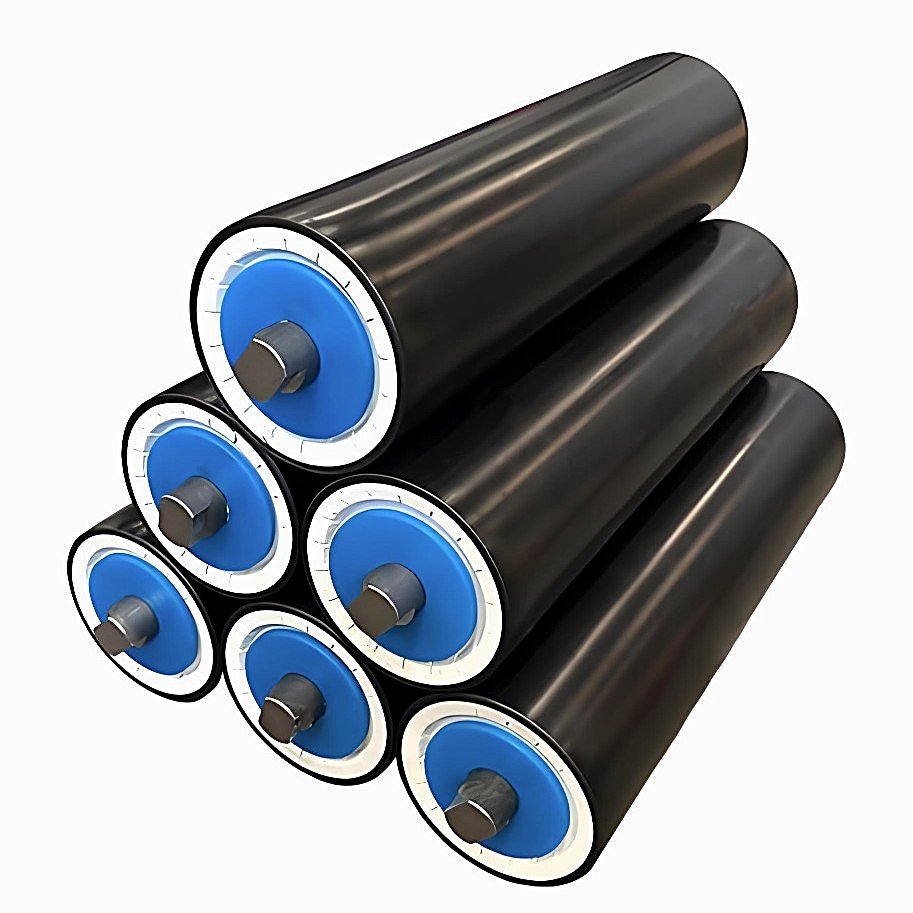
The roller for conveyor where steel gives up. In coal yards, ore handling and wet processing lines, a bare steel idler fights three enemies at once: abrasive fines, corrosion and the weight of the roller itself. This polymer family sidesteps all three — an ultra-high-molecular polyethylene tube that out-wears carbon steel in slurry service, cast nylon bearing housings that never need paint, and a plastic-on-metal build that runs quiet without any lubrication rounds.
Standard builds carry 89 mm or 108 mm outer diameters with working lengths made to order from 190 to 2400 mm on 6204 sealed bearings — rated from 36 kN on the common 89 series up to 150 kN on the heavy 108 troughing size. Everything else follows your conveyor: non-standard lengths, shaft ends and housings are machined to drawing as routine work, which is how most of these rollers leave the factory.
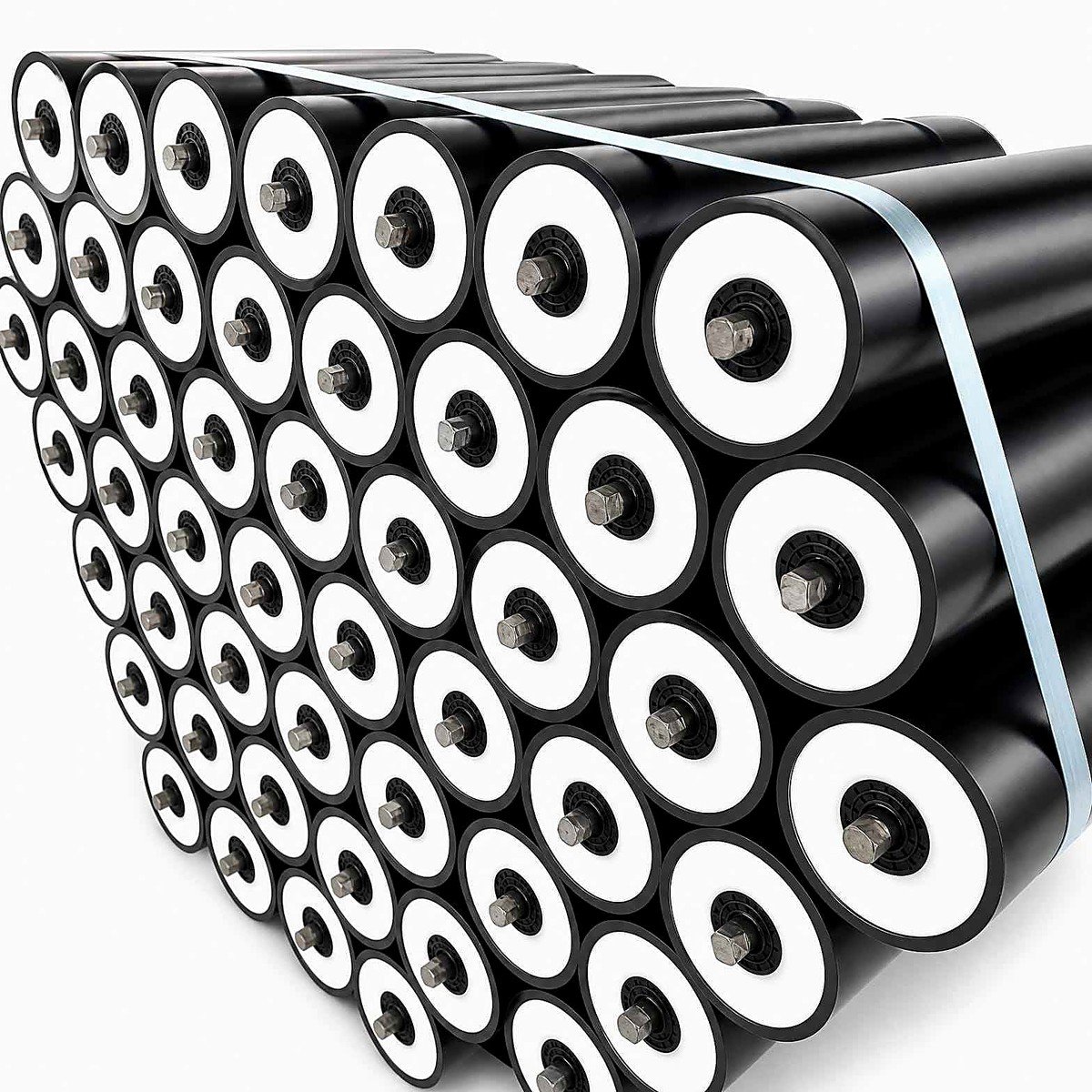
Product Overview
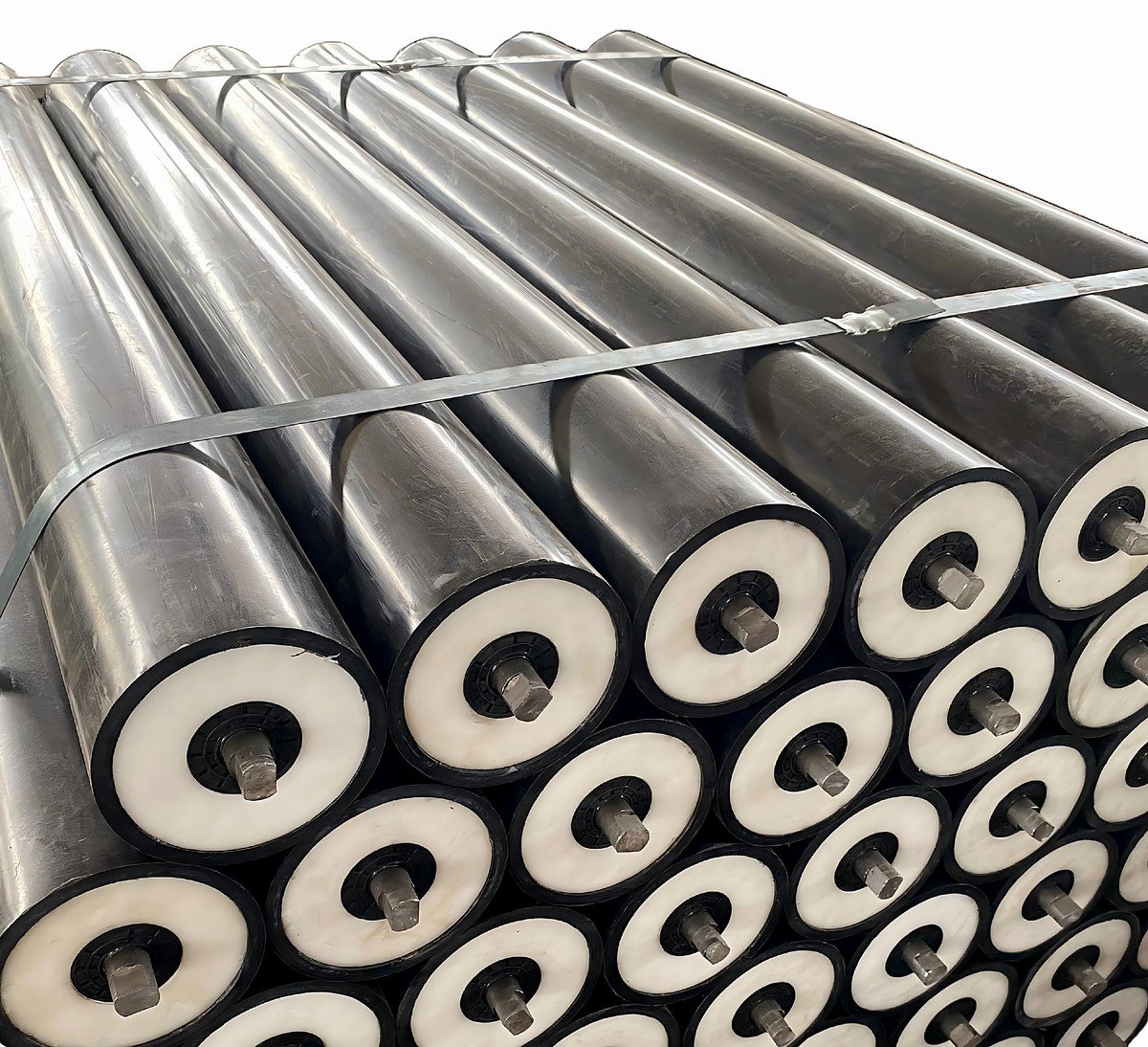
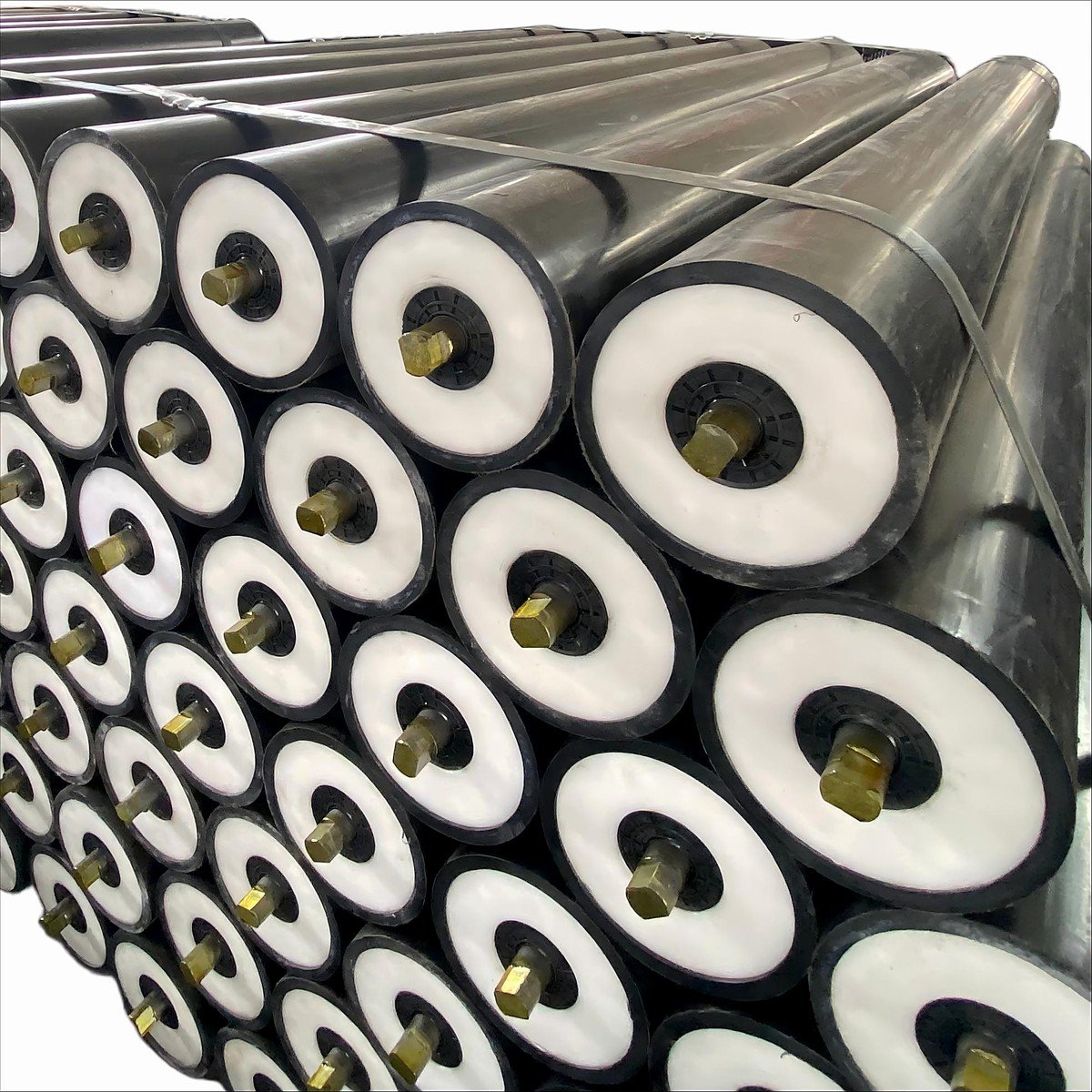
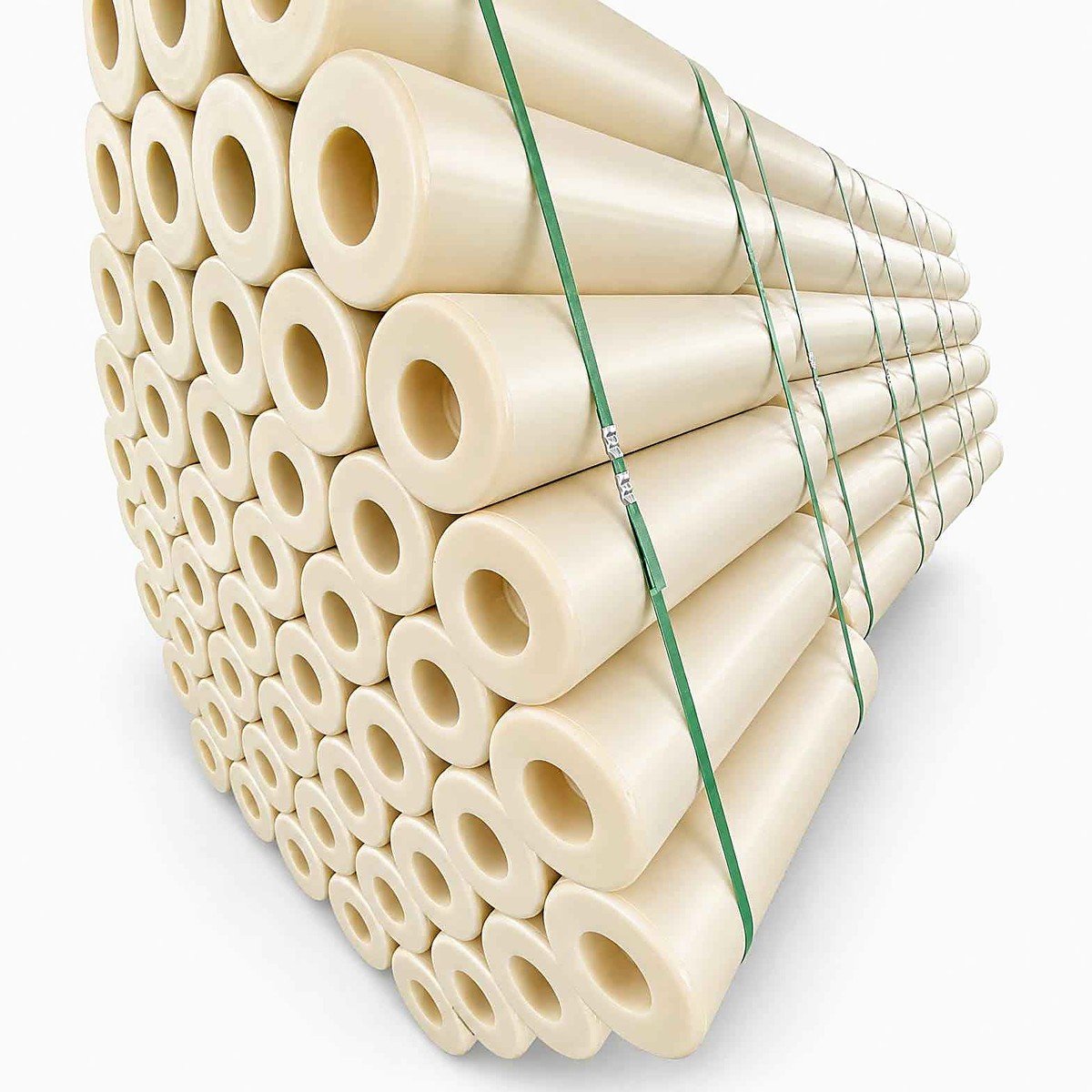
UHMW-PE tube walls slide over the conveyed material instead of gouging, and the surface is so slick that packed fines do not build up and unbalance the roller. Cast nylon bearing housings hold the 6204 sealed bearings on the steel spindle; the plastic housings damp noise, never corrode and isolate the bearing from the frame. The result is a roller that weighs roughly a third of the steel equivalent, needs no greasing, and keeps turning in environments that eat painted steel in a season.
Key Specification
- Tube: high-molecular UHMW-PE — wear, corrosion and self-lubricating
- Bearing housings: cast nylon, corrosion proof, noise damping
- Outer diameter: Ø89 mm or Ø108 mm standard; other diameters to drawing
- Working length: 190–2400 mm, made to order
- Bearing: 6204 sealed, dust protected
- Load rating: 36 kN (89×240) · 55 kN (89×300) · 150 kN (108×375) · 63 kN custom
- Application: mining and harsh-environment belt conveyor
Inquiry Email: sencroll@outlook.com
Build & Options
Standard builds below — non-standard sizes are routine work here. Send the drawing and we quote from that.
| Item | Detail |
|---|---|
| Tube material | UHMW-PE high-molecular polymer — wear resistant, self-lubricating, corrosion proof |
| Outer diameter | Ø89 mm or Ø108 mm standard; custom diameters to drawing |
| Working length | 190–2400 mm, made to order; non-standard lengths routine |
| Bearing housings | Cast nylon, molded to the tube, corrosion proof and noise damping |
| Bearing | 6204 sealed deep-groove ball bearing, dust protected |
| Load rating | 36 kN (Ø89×240) · 55 kN (Ø89×300) · 150 kN (Ø108×375) · 63 kN custom builds |
| Shaft | Steel spindle, ends machined to the frame drawing |
| Packing | Export packing, rollers bundled and wrapped for long transit |
What the Plastic Tube Changes
Out-Wears Steel in Slurry
UHMW-PE shrugs off the abrasive contact that scores and gouges bare steel tube. In coal, ore and aggregate service the polymer face stays smooth, so the belt rides flat and the roller keeps its balance for years.
Nothing to Rust, Nothing to Grease
The tube and housings are plastic through and through — no paint to chip, no plating to wear through, no re-greasing rounds. Wet yards, washdown areas and humid mines are normal service, not special cases.
Light and Quiet
A polymer roller weighs about a third of the steel equivalent — crews swap them one-handed and the frame carries less dead weight. The plastic housings damp noise, so the line runs noticeably quieter than steel-on-steel.
Custom Is the Default
The listed diameters and lengths are the common builds. Non-standard lengths, other diameters, shaft ends and load ratings are machined to your drawing — one roller up, mixed sizes in one order.
Where Polymer Rollers Are Used
- Mining belt conveyor — coal, ore and aggregate handling in dusty yards
- Wet processing and washdown lines where steel rollers corrode
- Corrosive material handling — fertilizer, salt, chemical-adjacent plants
- Light-weight conveyor retrofits where the frame or crew needs lighter rollers
- Replacement rollers for existing imported conveyor systems
Polymer Roller Questions
Polymer or steel idler — which one for my conveyor?
Polymer wins where the environment is wet, corrosive or heavily abrasive — it never rusts, self-lubricates and out-wears steel in slurry service, at a third of the weight. Steel still makes sense for dry general duty and the highest point loads. Send the material, the environment and the load per roller, and we recommend the tube instead of defaulting to one.
What load can these rollers carry?
The standard builds are rated at 36 kN (Ø89×240), 55 kN (Ø89×300) and 150 kN (Ø108×375), with custom builds around 63 kN depending on the configuration. Higher ratings are possible with changed housings and bearings — send the load per roller and we confirm the build before quoting.
Can you make lengths outside the standard range?
Yes — 190–2400 mm covers the common builds, and non-standard lengths are routine work here, not special orders. Diameter, shaft ends and housings follow your drawing too. One roller up and mixed sizes in one shipment are both fine.
Do polymer rollers need lubrication?
No. UHMW-PE is self-lubricating and the 6204 bearings run in their factory-filled grease for life, so there are no re-greasing rounds on the line. That is a large part of the maintenance saving on long conveyor runs.
What do you need to quote a polymer roller?
The outer diameter, working length, load per roller and quantity — plus the material being conveyed and the site environment. A drawing or a photo of the worn roller covers most of it. You get a price and lead time within one business day.
Send the Drawing or the Working Condition
Email the diameter, length and load per roller — or a photo of the roller you are replacing. Polymer rollers are quoted with packing and lead time, usually within one business day.