
PU Roller Wheels
Cast polyurethane wheels for forklifts, pallet trucks, AGV drive units, casters and special handling equipment. Tread hardness, hub design, diameter and bore all matched to the duty — nine standard sizes from Ø70 to Ø300 mm, custom manufacturing from Ø50 to Ø500 mm.
Polyurethane roller wheels are the default choice where a wheel has to carry load, run quiet and still survive thousands of kilometres of concrete. The construction is simple, and that is the point: a cast polyurethane tread bonded directly onto a machined cast iron or steel hub. The PU takes the surface — abrasion, cuts, oil, grit and the constant flexing of a loaded wheel rolling — while the metal hub holds the bearing, the axle and the torque.
Because the tread is cast and then ground rather than pressed from a fixed tool, the wheel behaves like a machined component rather than a catalogue part. Diameter, width, bore, hub profile and tread hardness can all follow your drawing. A pallet truck that needs a Ø80 × 70 mm load roller gets one; an AGV drive unit that needs a Ø250 mm wheel with a specific keyway and bore gets one; a special vehicle that needs Ø500 mm gets one. The range we manufacture runs from Ø50 mm casters up to Ø500 mm heavy drive wheels.
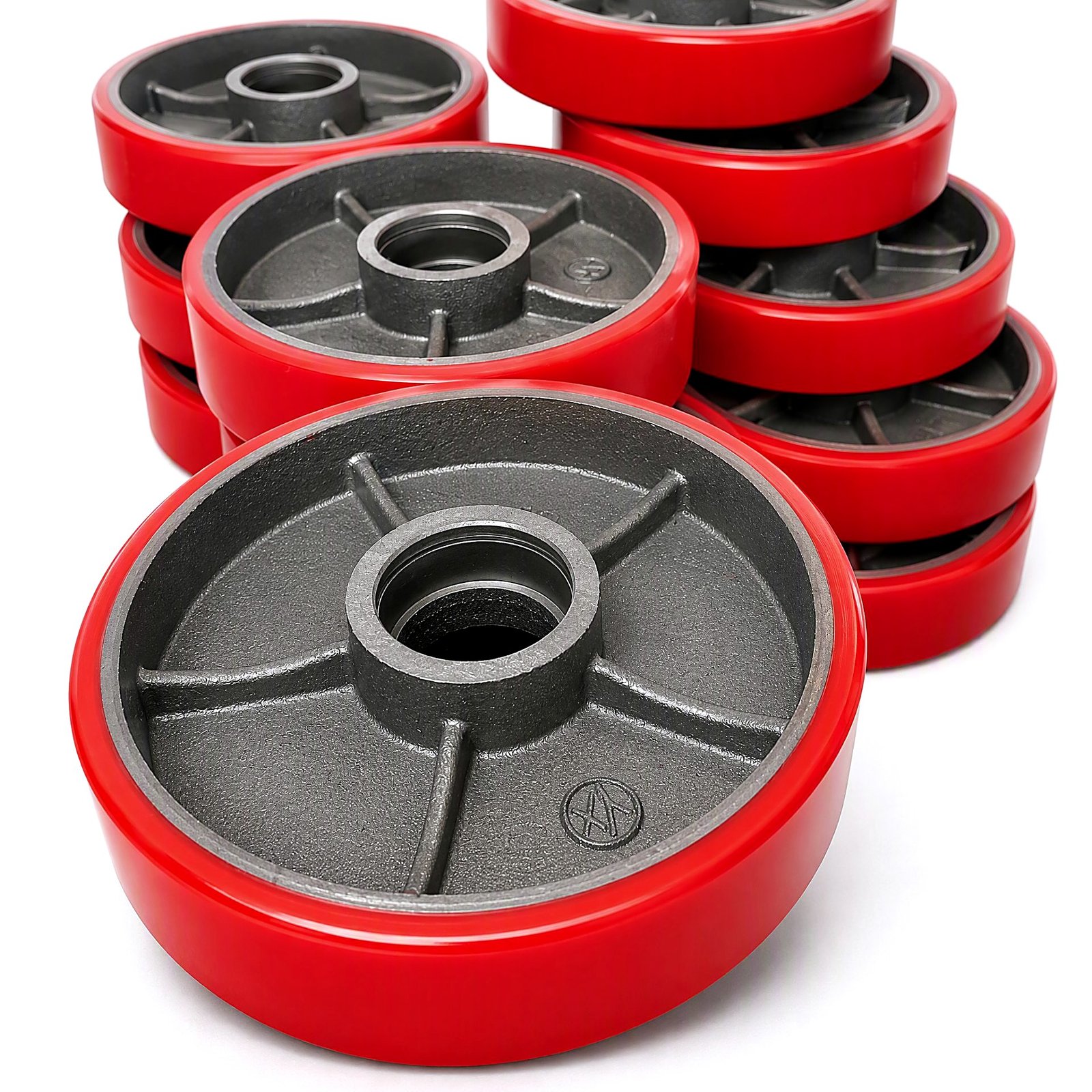
Red is the standard tread colour — the colour pallet truck wheels are specified in around the world — but colour is cosmetic. What decides wheel life is the PU grade, the hardness and the bond, and those are matched to the load, the floor and the duty cycle rather than picked from a list.
PU Wheel Families
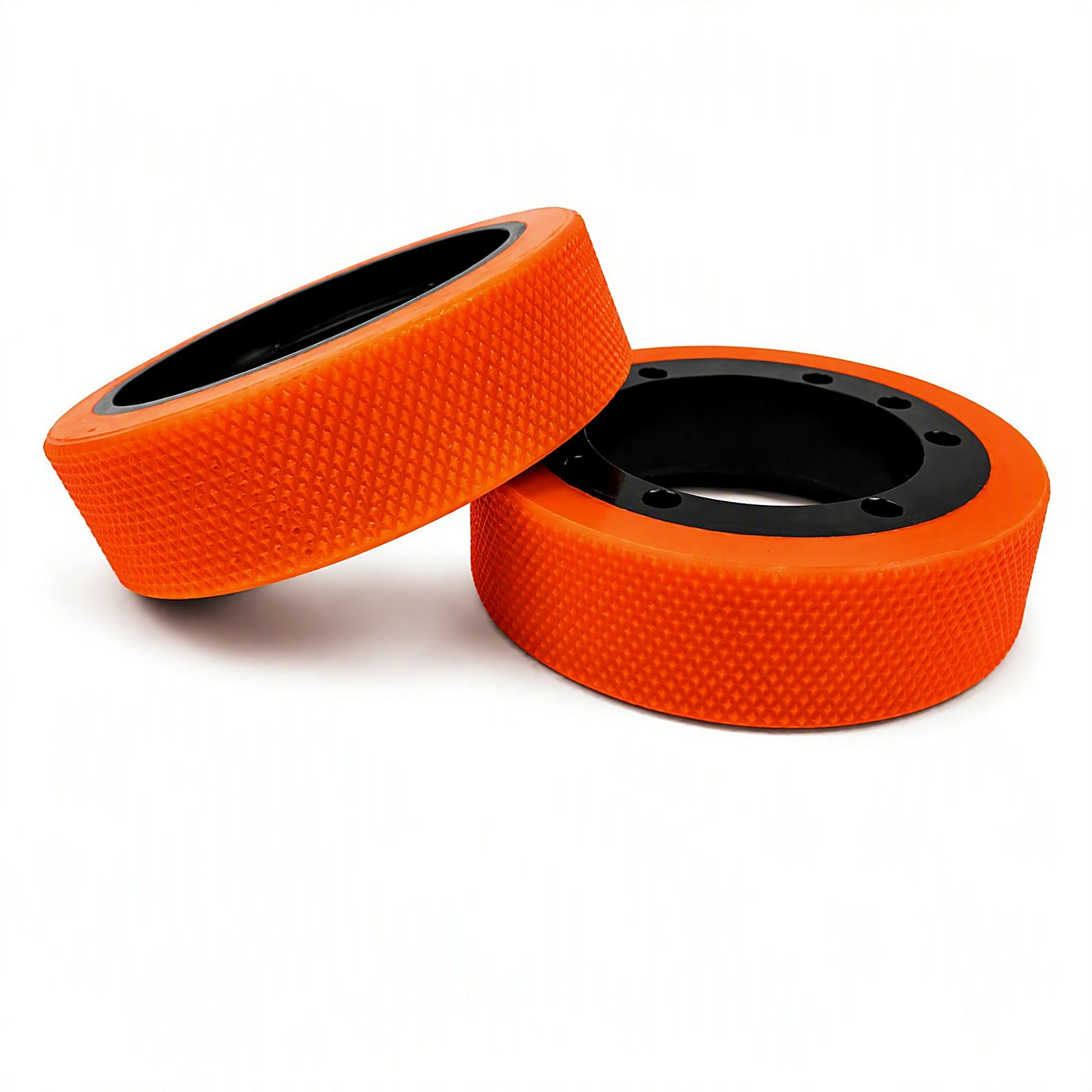
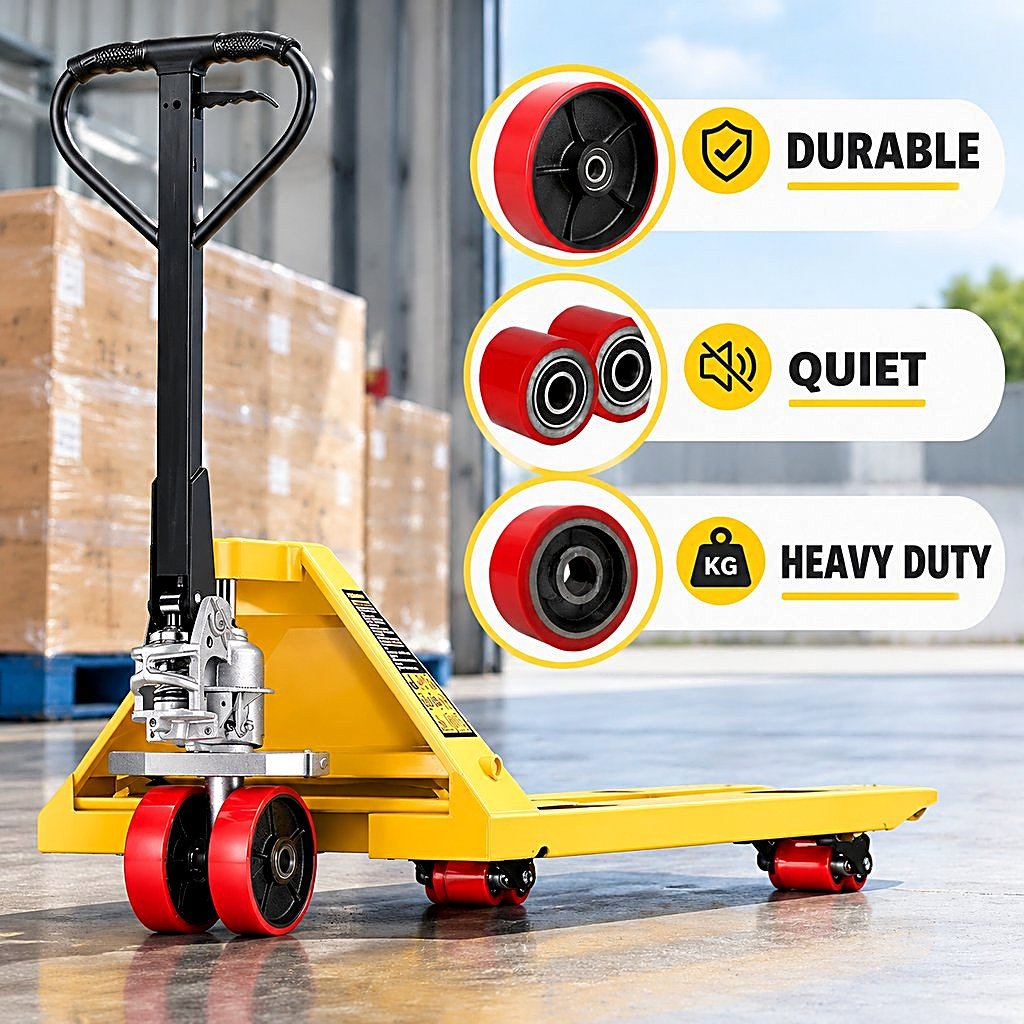
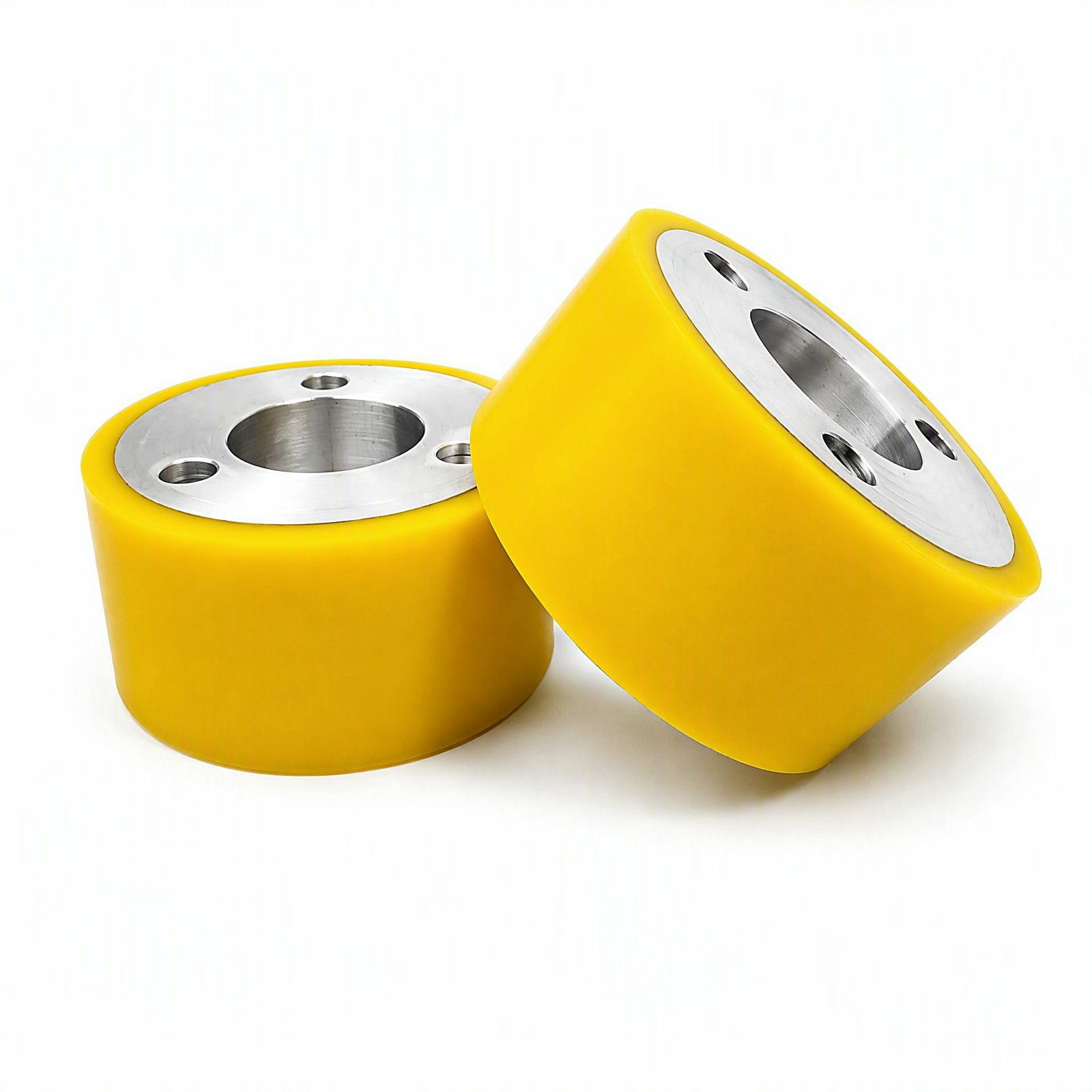
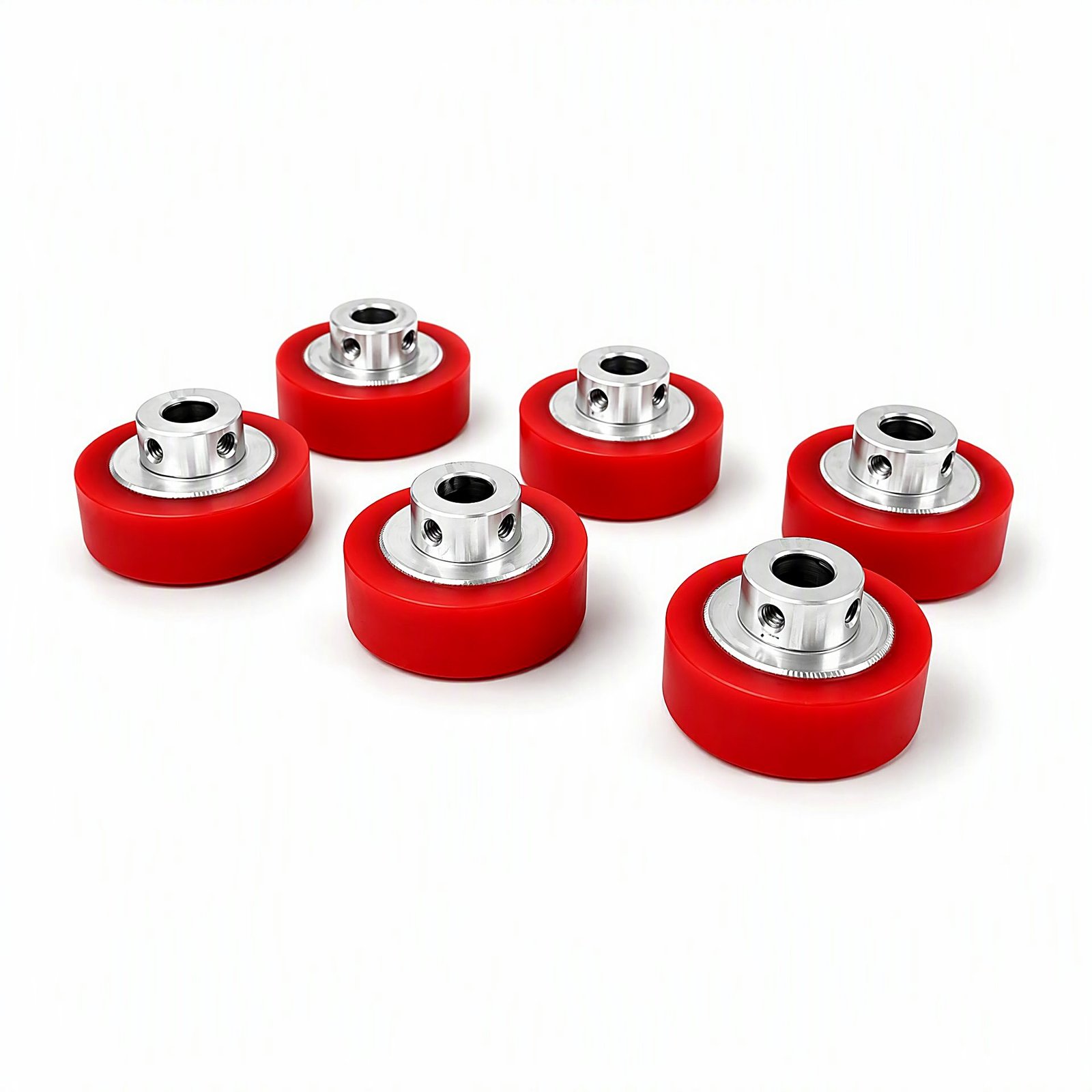
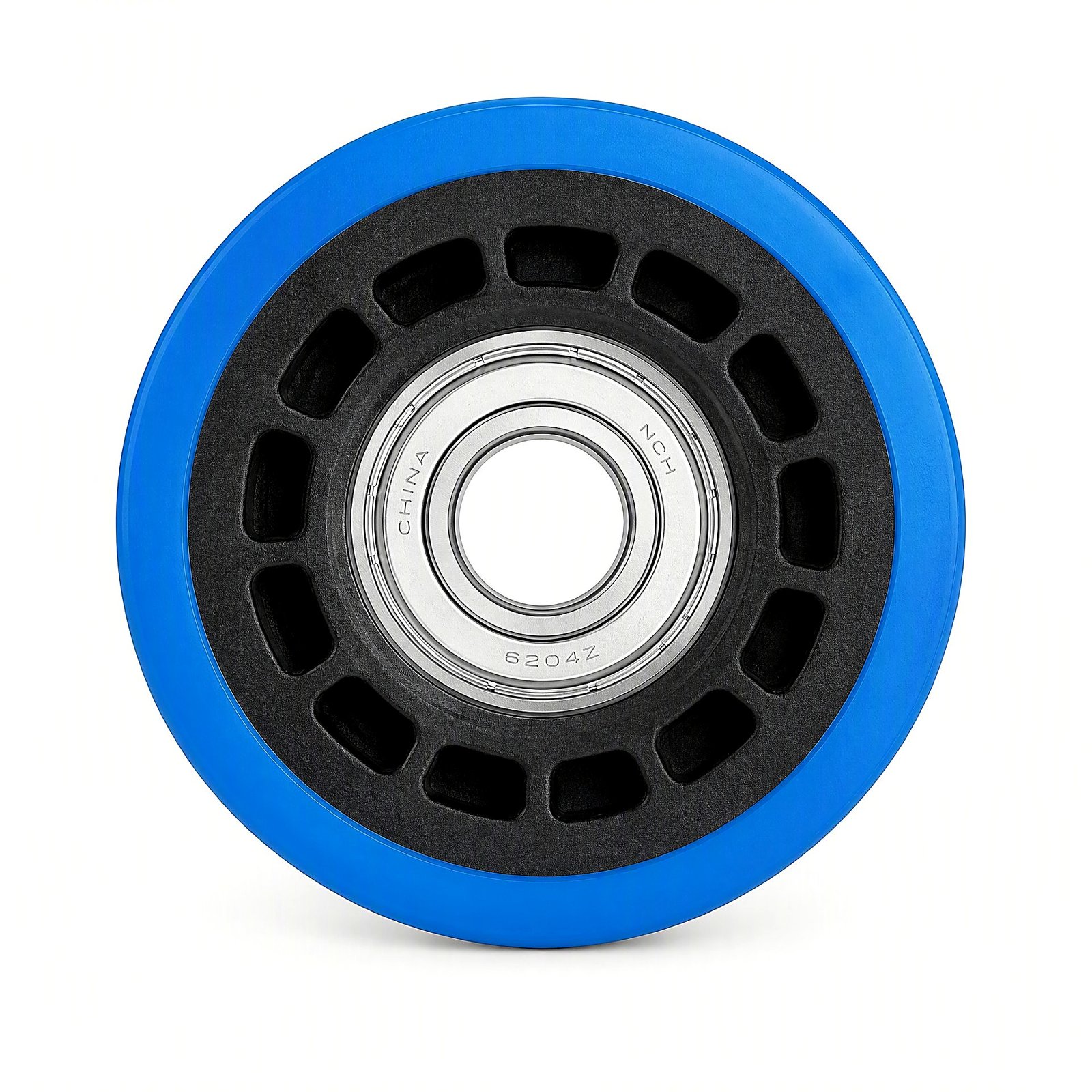
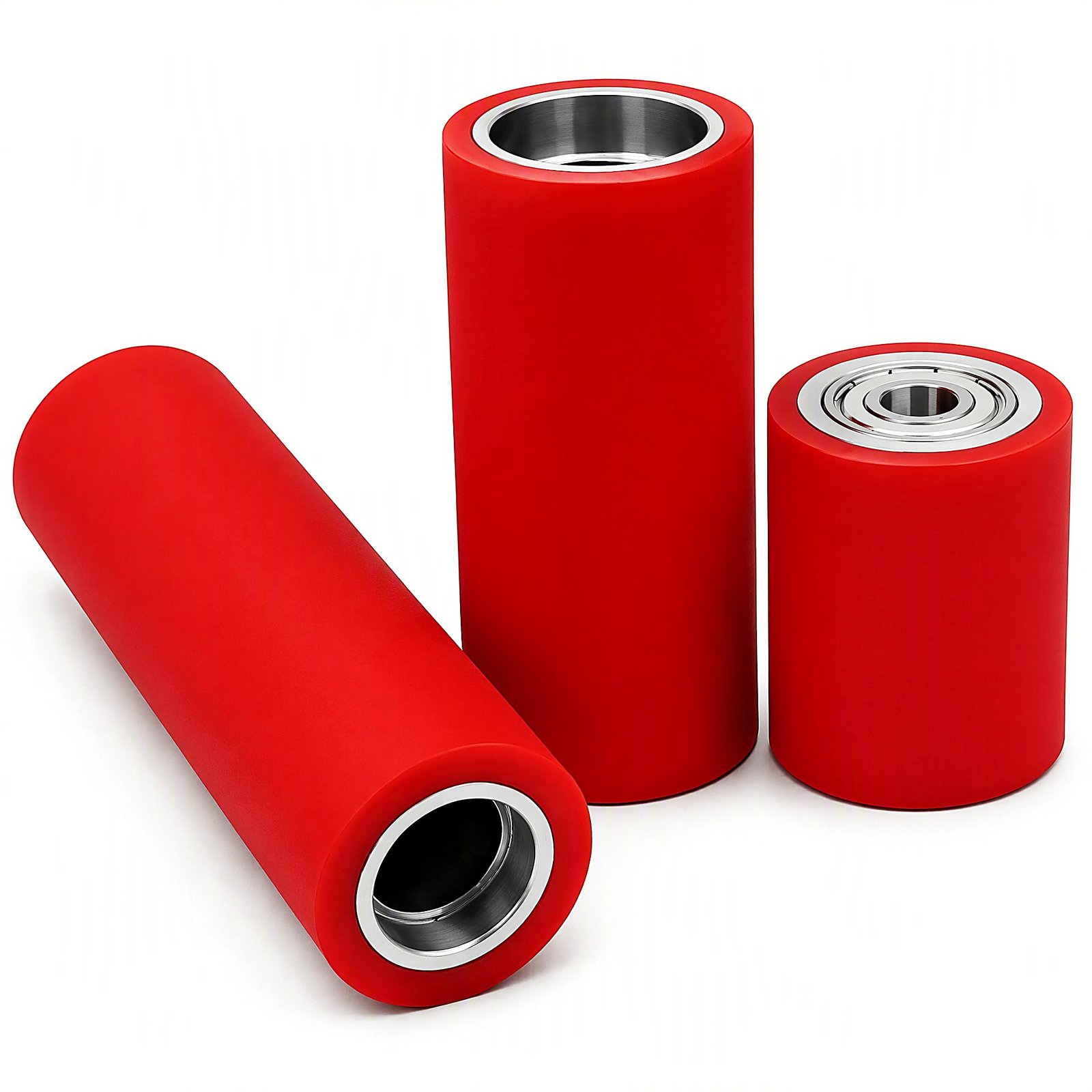
From standard pallet truck wheels to shaped specials, aluminium cores and metering wheels — every family is cast and machined in the same workshop, to drawing.
PU Roller Wheel FAQs
Polyester or polyether PU — which do I need?
Polyester PU has the better abrasion and cut resistance and resists oils and hydrocarbons, which is why it is the usual choice for pallet truck and forklift wheels indoors. Polyether PU gives up a little wear resistance but resists hydrolysis — so it is the safer grade in hot, humid or regularly washed environments, and it behaves better at low temperature. Tell us where the wheel runs and we specify the grade.
Will PU wheels work on rough or damaged concrete?
Better than nylon or steel, but they are not indestructible. Sharp edges, gravel and metal swarf cut the tread, and a narrow wheel concentrates load until the surface gives way. The answer is usually a wider tread and a harder durometer rather than a softer one — soft treads grip on damaged floors but wear through faster.
Why do some PU treads come away from the hub?
Almost always a bonding problem, not a PU problem: an under-prepared hub surface, moisture or oil on the hub at casting, or a tread run past its temperature limit until the interface softens. We grit-blast and prime the hub before casting, and keep the PU cast directly onto metal so there is no adhesive layer to fail in the first place.
Can these wheels sit under load for months without moving?
They can, but a wheel under constant static load will eventually take a set — a flat spot you feel as a bump on the first few metres. Harder treads and larger diameters resist it far better. For equipment that is parked loaded for long periods, store it unloaded or move it a short distance periodically.
How does PU compare with rubber and nylon for wheel life?
Rubber grips best and runs quietest, but wears fastest and cuts easily. Nylon is hard, rolls with the least resistance and never marks, but it is noisy, slippery on wet floors and gives a harsh ride. Cast PU sits between them and usually wins on total life: it carries a similar load to nylon, runs quieter, does not mark and resists cutting and abrasion.
What You May Want to Know About PU Roller Wheels
Tread and hub: what each part does
A PU wheel is two materials doing two jobs. The tread is cast polyurethane — it contacts the floor, absorbs shock and carries the load into the hub. The hub is cast iron or steel, machined to hold the bearing and take the drive torque. Wheels fail when the two are treated as one: a heavy hub under a thin tread wears through, and a thick soft tread on a light hub deforms under load. The two are specified together.
Tread hardness, and what the number means
Wheel treads are quoted in Shore A. Most industrial PU wheels run in the harder part of the range, because load capacity and rolling resistance both improve as the tread gets harder. Softer treads are used where grip and floor protection matter more than load — polished floors, retail, light casters. Hardness is not a quality grade: a soft wheel is not a worse wheel, it is a wheel for a different job. We confirm the hardness against the load per wheel and the surface rather than defaulting to one number.
Grip, rolling resistance and floor protection
PU has higher rolling resistance than nylon and lower than rubber, which is exactly the compromise most warehouses want: easy enough to push by hand, but with grip on a slightly wet or dusty floor. It does not mark concrete, tile or epoxy, so it is safe on finished floors. On very smooth wet surfaces, or on ramps, a rubber tread is still the better answer.
Oil, water, temperature and chemicals
Polyester PU handles oils, greases and most hydrocarbons that would swell or soften rubber. Polyether PU handles water, humidity and washdown, where polyester would slowly hydrolyse. Continuous service above roughly 80 °C is outside what standard cast PU likes, and strong acids, alkalis and some solvents attack it outright. If the wheel meets any of these, say so at enquiry — it is the single most common reason a wheel underperforms.
Where these wheels are used
Pallet trucks and forklifts take the volume: load rollers, steering wheels and drive wheels. Beyond them, AGV and AMR drive units, industrial casters and trolleys, scissor lifts, conveyor guide wheels, and special vehicle or trailer wheels where a standard size does not exist. The application decides the wheel far more than the wheel decides the application.
What we need to quote a wheel
Outside diameter, tread width, bore or bearing number, load per wheel, and the floor it runs on. Add the operating environment — oil, water, steam, chemical, temperature — and the duty cycle. With those numbers we can propose the hub, the PU grade, the hardness and the tread profile, and quote against a specification instead of a guess.
Why buy from SENC
We cast and machine in our own workshop in Hengshui, so the wheel is not resold from a catalogue. That means one piece is possible, sizes can be mixed in an order, and the hardness can be changed for your duty rather than for a stock list. ISO 9001:2015 quality system, quotation within 24 hours, and shipment worldwide.
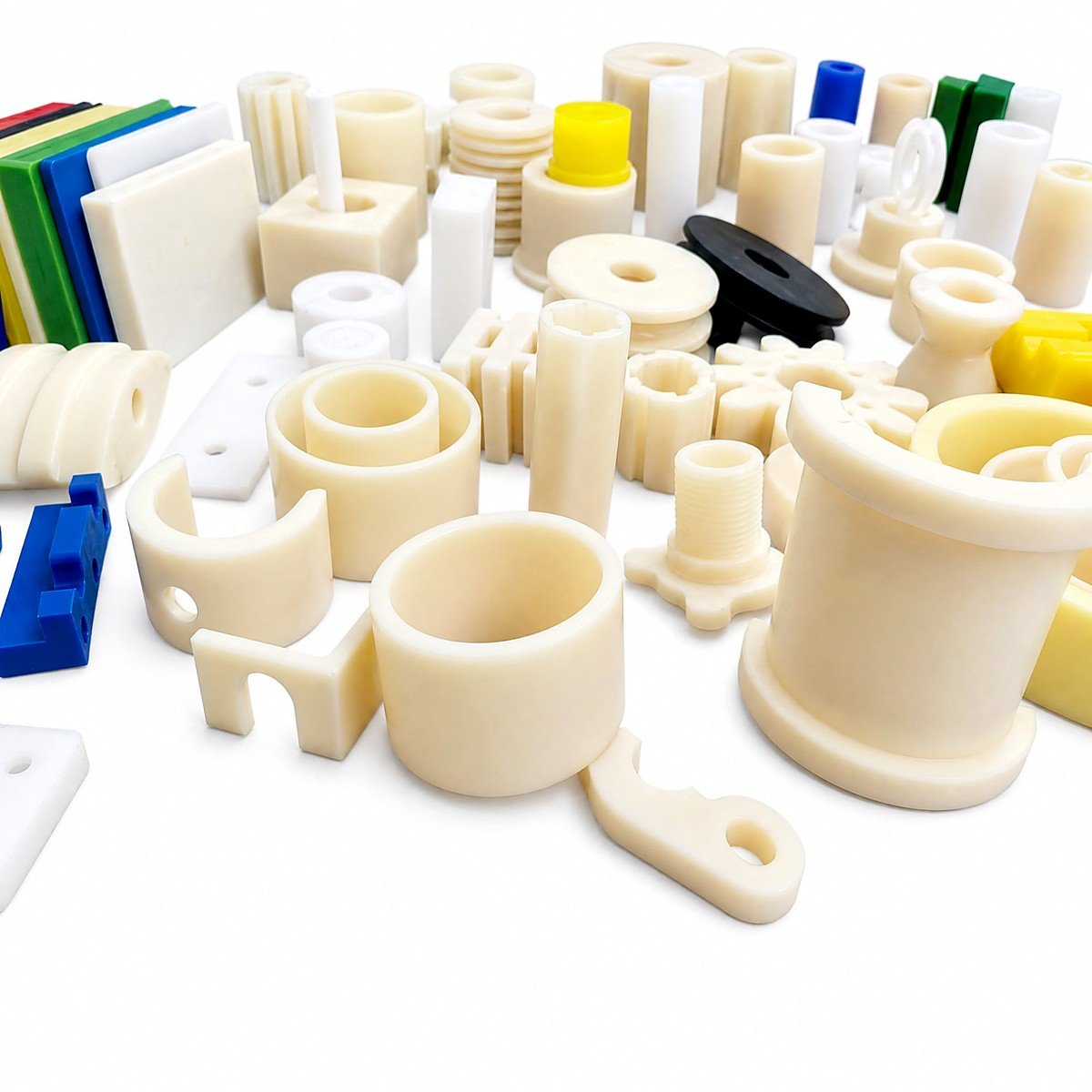
Other Wheel Materials
Send Your Wheel Size
Email the diameter, width and bore — or a photo of the wheel you are replacing. You will get a material proposal, a price and a lead time within one working day.